A few years ago, I showed a short express first aid course at a local sports club. Two weeks later on, the club supervisor sounded me, his voice shaking. A gamer had broken down with unexpected heart attack throughout a social video game. One of the moms and dads, who had just ended up an express cpr course, began compressions while one more got the club's defibrillator. Paramedics later said those initial 3 minutes probably made the difference in between a funeral and a complete recovery.
That is the quiet power of fast first aid training. It does not make headlines, however it changes results, one event at a time.
This kind of quick, concentrated training is no longer a high-end. It is one of one of the most functional means an area can safeguard itself, especially when people are active, workplace lineups are tight, and volunteers are hard to discover. The trick is to match the speed of the course with the depth of abilities that really matter when something goes wrong.
Why "fast" training functions when it is done properly
People commonly listen to "fast first aid course" and think "cut down" or "shortcut". In my experience, the best fast first aid courses are not faster ways at all. They are tightly created programs that remove fluff and concentrate on the small collection of actions that alter outcomes.
Most emergency situations follow a comparable pattern. There is a brief window where a couple of basic steps maintain a negative circumstance from obtaining a lot worse. Fast first aid training focuses on those early mins: checking danger, calling for aid, beginning cpr training if needed, and managing major blood loss. When you practice these foundations, also for a couple of focused hours, you develop sensible confidence that carries over to real life.
A full day first aid and cpr course fits, particularly for workplaces with higher risk or for assigned first aid policemans. But most of people in an area do not need to grasp every particular niche circumstance. They need to recognize exactly how to:
Recognise a life threatening emergency. Start efficient first aid and cpr within the very first min or two. Use readily available devices, like a defibrillator, without freezing.A fast first aid course that is well structured can accomplish those 3 objectives incredibly well.
What in fact transforms when more individuals know very first aid
Statistics can feel abstract, however the mechanism is simple. When more bystanders have even standard first aid training, 3 points change in a community.
First, the "dead time" between collapse and efficient treatment reduces. In heart attack, as an example, every minute without cpr decreases the opportunity of survival by roughly 7 to 10 percent. Fast cpr courses are essentially an area level treatment against those shed minutes.
Second, the top quality of first aid enhances. It is not enough that someone does "something". Poor compressions, inaccurate airway positioning, or unneeded moving of an injured person can restrict the advantage or create brand-new problems. Even a brief express first aid training session can deal with typical myths, such as slapping a person having a seizure or placing something in their mouth.
Third, individuals that have trained when ended up being advocates. I have seen moms and dads that completed an express child care first aid course take place to push their school to set up a computerized outside defibrillator, or local business proprietors that upgrade their first aid packages and motivate their personnel right into fast first aid courses. The training splashes outward.
The real distinction between fast, express, and complete length courses
Course names vary by carrier, yet in method there is a spectrum.
At one end, you have express first aid courses. These usually run for 2 to 4 hours. They focus on a narrow but essential skill set: basic life support, cpr, choking, bleeding control, and exactly how to turn on emergency situation solutions swiftly and properly. An express first aid course can fit area groups, busy moms and dads, Click here or volunteers who require the essentials under a limited time budget.
In the middle, you locate fast first aid training that still causes an across the country acknowledged first aid certificate. These courses may integrate some pre course online concept with a much shorter face to face functional session. There may be a "fast first aid course near me" that makes use of e finding out modules for the understanding component, so the class time is utilized virtually completely for hands on practice. For numerous workplaces, this mixed layout has actually ended up being the wonderful spot.
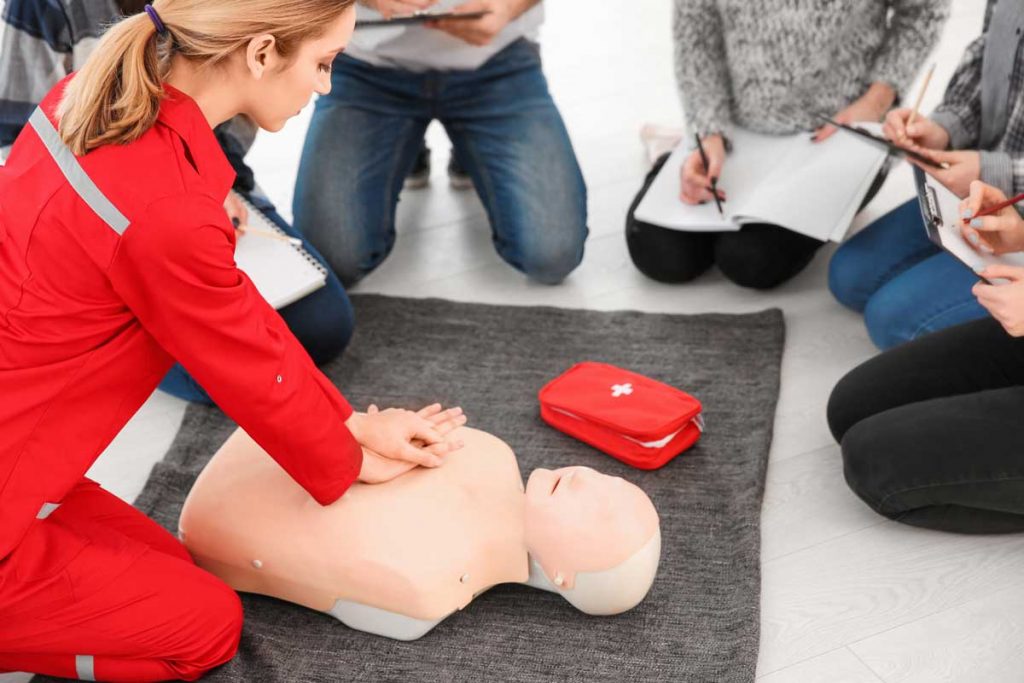
On the far end sit full day, and even multi day, first aid courses. These first aid and cpr courses cover a broad range of subjects, from environmental emergencies to a lot more complicated medical problems. They are necessary for high duty roles, such as office first aid police officers, remote area workers, or expert carers.
Alongside general first aid courses, there are expertises:
- Fast cpr courses and fast cpr refresher course choices that focus just on resuscitation abilities, commonly in 1 to 2 hours, ideal for annual updates. Express childcare first aid course programs, developed around kids and infants, consisting of choking, bronchial asthma, anaphylaxis, and high temperature relevant emergencies. Targeted first aid and cpr training classes for certain industries, such as building and construction, friendliness, or health and fitness, where the danger accounts differ.
The important inquiry is not whether a course is called "fast" or "express", but what end results it assures and how it evaluates competence.
What you can realistically learn in a fast first aid course
I have seen people walk right into a brief first aid training session with questions, then leave stunned by how much they can do. If the course is made well, you need to be able to leave positive in at least these areas.
You needs to know just how to check for danger, action, airway, breathing, and blood circulation without getting lost in details. You must have the ability to identify when someone is not breathing normally and begin cpr with company, fast compressions in the facility of the breast. If an automatic external defibrillator is available, you should really feel able to transform it on and adhere to the motivates without fear of "doing it incorrect".
You must understand the fundamentals of choking in adults, children, and infants. That consists of motivating coughing, using back strikes, and making use of chest drives when essential. You must understand that for babies, the technique and positioning differ, something express child care first aid training hangs out on.
You should practice managing major bleeding with straight stress, straightforward bandaging, and improvised approaches when no set is nearby. There must be clear discussion on when to use a tourniquet and when simple pressure is enough.
Beyond the physical abilities, you need to discover exactly how to call for aid properly, exactly how to hand over jobs to bystanders, and how to handle your very own stress in the initial few minutes. Excellent instructors hang out on communication and leadership as high as handy positioning for compressions.
If a service provider is offering a fast certification that claims to transform you right into a professional on every possible emergency situation in 90 mins, that is impractical. A concentrated fast first aid course that gives you strong basic life assistance skills, however, is extremely possible because window.
The compromise of much shorter courses
Shorter, much faster courses are eye-catching, but they do involve compromise. It deserves being straightforward regarding them.
You cover much less breadth. A fast first aid course normally focuses on life threats. Much less immediate, however still crucial, concerns like small wounds, strains, or environmental injuries might get just short focus or loss outside the curriculum.
There is much less time for repeating. Muscle memory originates from technique. A complete day first aid and cpr course could run several rounds of cpr drills, whereas a fast cpr course may just permit a couple of full cycles per person. The teacher must handle timing thoroughly to guarantee every individual obtains authentic hands on time, not simply seeing from the sidelines.
Individual comments is tighter. In a compressed session, the fitness instructor may need to relocate quickly in between participants. This is where team dimension limits and seasoned trainers issue. A small group in a fast first aid course can receive practically the very same depth of responses as a much longer session with a large group.
Online concept can create an incorrect complacency. Blended courses that integrate self paced e discovering with in person skills evaluation work when individuals actually finish the pre job properly. When they hurry with the modules just before class, their understanding might be superficial. Responsible carriers integrate in quick expertise checks throughout the useful session to catch and remedy any kind of gaps.
The secret is to match the course format to your demands. A moms and dad that simply wants to know how to handle choking and basic cpr might genuinely favor an express cpr course, after that repeat a fast cpr correspondence course every year. A work environment safety and security police officer, on the other hand, must dedicate to a deeper first aid course with more situations and assessment.

How repeating and refreshers maintain skills alive
First help skills fade. That is not a moral stopping working, it is just how memory benefits seldom made use of tasks. I have actually examined people twelve month after a first aid and cpr course and seen compression depth, rate, and hand placement deteriorate significantly.

Fast correspondence course are just one of the very best methods to counter that natural degeneration. If your first training was strong, a brief express cpr training session every 6 to twelve month can recover your method quickly. The exact same is true for other core abilities like utilizing a defibrillator or handling choking.
From a neighborhood perspective, it usually functions better to have individuals complete an accessible express first aid Joondalup fast first aid course initially, then installed much shorter, normal refreshers. This version keeps abilities closer to the surface and values the truth of hectic routines and shifting lineups. It also decreases the psychological barrier of "I do not have a complete day to give up", which is an usual factor individuals stay clear of first aid training altogether.
Some work environments schedule quarterly micro sessions, 20 to 30 first aid course Hobart minutes each, where personnel cycle via cpr manikins and scenario conversations. Others book a yearly fast cpr refresher course for all team, while marking a smaller sized team to finish even more thorough first aid and cpr courses every three years. The pattern matters much less than the consistency.
The special case for child care and youth settings
Whenever I educate early youth teachers or moms and dads, the anxiousness are different. People stress over tiny airways, allergies, high temperatures, and the worry of "damaging" a toddler with compressions.
Express childcare first aid courses exist completely factor. Children and infants present in a different way to grownups. Anaphylaxis in a child, for example, can relocate frighteningly fast. Asthma strikes might escalate throughout play or sporting activity without much warning. Choking cases are much more common among young children than grownups, and the physics of their bodies need various techniques.
An express child care first aid course typically focuses on:
- Infant and youngster cpr, consisting of risk-free compression deepness and ratio. Choking in babies and children, with emphasis on placing and mild yet effective force. Asthma emergencies, including inhaler and spacer use. Allergic reactions and anaphylaxis, with technique utilizing adrenaline injector training devices. Fever, seizures, and head injuries, including red flag signs that need immediate clinical review.
For childcare centers, kindergartens, and schools, routine express childcare first aid training is one of one of the most vital safety financial investments they can make. It additionally calms personnel and moms and dads. When teachers know they have exercised these certain situations, they sleep a little easier.
Choosing a fast first aid or cpr course that actually prepares you
Not all first aid training is equal. If you are scrolling via search results for a "fast first aid course near me", you may see glossy guarantees and discount rate offers. Look past the marketing and concentrate on a few core questions.
Who accredits the service provider, and does the course result in an acknowledged first aid certificate where needed? For workplace conformity, your organisation may have legal obligations that specify a certified carrier or particular systems of competency.
How much hands on practice is developed right into the timetable? If a 2 hour cpr course is arranged for 30 people with a solitary instructor, you will certainly not get the method and comments you require. The majority of good cpr training programs restrict group dimensions or offer assistant trainers.
What is the background of the fitness instructors? Experienced instructors, often with scientific or emergency response experience, bring nuance and genuine tales that pure theory fitness instructors lack. They can clarify why standards transformed, share what really happens during a 000 or 911 phone call, and aid you browse the messy reality where people panic or problems overlap.
How frequently does the company upgrade their web content? First aid standards change as evidence progresses. Cpr compression depth referrals, use of oxygen, and monitoring of anaphylaxis have actually all changed with time. A top quality service provider assesses the most up to date assistance from reliable resuscitation councils and regulatory bodies.
Is there a clear path for refreshers? Fast first aid courses shine when they become part of a recurring knowing strategy, not a one off tick box. Look for suppliers that provide express cpr courses, fast cpr refresher course choices, or brief scenario based sessions at practical intervals.
Building a society of first aid in your neighborhood area
Individual training issues, yet a really secure area grows from society. I have actually seen suburban areas where practically every sporting activities club, school, and local business has staff with current first aid and cpr training. Those are the places where onlookers action in without hesitation.
If you intend to reinforce first aid capability where you live or work, a couple of approaches often tend to work well.
First, normalise first aid training in social groups. When one parent suggests an express first aid course for the moms group, uptake is typically high. Individuals feel more comfortable finding out together with pals, and the common experience urges them to keep skills current.
Second, link training to noticeable changes. After a fast first aid training session, assess your regional centers. Are first aid packages stocked and easily accessible? Is there a defibrillator, and do people recognize where it is? Tiny, concrete improvements strengthen the worth of what has been learned.
Third, treat first aid as a common responsibility as opposed to an expert job. Instead of relying upon a solitary "first aid individual" at every event, aim for wide insurance coverage. Also if one person holds the primary first aid certificate, others can complete much shorter express cpr training or fast first aid courses so they feel able to assist.
Fourth, talk openly around near misses out on and successes. When a person uses their training, whether at work, at sport, or in your home, share the story with their permission. These real experiences are much more influential than any brochure. They additionally aid others visualize themselves stepping forward.
What it feels like to utilize your training
People usually fret they will freeze or forget everything under pressure. That fear is sensible, and it is one reason excellent training issues. Practice does not turn you right into a robot that smoothly keeps in mind every action, yet it gives you a starting point.
One of my graduates, a young hospitality employee, explained her initial actual emergency situation. A client had actually broken down in the coffee shop. She claimed her mind went empty for a minute, but her body began relocating. She looked for reaction, screamed for someone to call an ambulance, and started compressions just as we had actually practiced. Just after paramedics took control of did her hands start shaking.
That pattern prevails. In the moment, you might not recall every detail of your first aid course. What lugs you is a couple of practiced practices: appearance, pay attention, really feel, act. A fast first aid course that drills those practices effectively deserves even more than a long course you barely involved with.
People often apologise afterward, claiming, "I do not think I did it completely." Perfection has never ever been the standard. Beginning is. Imperfect compressions are much better than none. A slightly unpleasant recovery setting is far better than leaving a person level on their back. Fast first aid has to do with shifting the reaction from hesitation to action.
Making first aid training practical and humane
Technical skills issue, yet so does the human side. An excellent first aid and cpr course, also a brief one, should prepare you for the psychological texture of emergencies.
Emergencies are loud, unpleasant, and filled with completing voices. You may need to give guidelines to unfamiliar people, assure member of the family, or handle your very own concern of making things even worse. In my classes, I urge basic, clear language: "You, call a rescue." "You, get the first aid package." This type of directive communication feels abnormal initially, especially in cultures that value politeness, yet it stops confusion.
There is also the aftermath. Utilizing cpr on a coworker or unfamiliar person is a considerable psychological event. Many people feel unsettled for days or weeks. Some replay the event in their minds, thinking about what they can have done in different ways. Comprehensive first aid courses occasionally discuss debriefing and support, yet fast courses usually avoid this.
If you have used your skills, it is valuable to talk with a person that understands, whether that is the trainer, a colleague, or an expert. Remind on your own that acting, even miserably, is a profound solution. When communities promote fast first aid and cpr courses, they should also advertise a culture of look after those that step in.
Practical following steps
If you have actually reached this factor and are believing, "I must possibly do something about this," then the most helpful step is really easy. Select a practical beginning factor and devote to it.
You could book an express cpr course this month, after that schedule a much longer first aid and cpr course later in the year. You might speak to your school, sporting activities club, or office concerning bringing in express first aid courses or express child care first aid courses for your group. You could be the individual who suggests a yearly fast cpr correspondence course as part of your organisation's safety routine.
Whatever path you pick, aim for training that:
- Gives you purposeful, hands on practice. Focuses on the very first few minutes of genuine emergencies. Connects you with a network of others that share the responsibility.
A fast first aid course is not just a line on a return to or an office need. It is a quiet promise you make to the people around you. When something goes wrong, you will certainly not stand back and watch. You will certainly recognize the fundamentals, you will certainly begin, which might be all that is needed to keep somebody to life up until aid arrives.